Serverless + Edge: Cost-Efficient, Ultra-Low Latency at Scale

Serverless + Edge: Cost-Efficient, Ultra-Low Latency at Scale
Serverless and edge computing are coming together to change how modern apps are built. If you're leading a big IT project or growing a new software business, understanding how these two work together could give you a strong advantage over the competition.
Every time someone taps, swipes, or gives a voice command, it’s judged in just a tiny moment. Whether it’s a fintech app giving real-time stock tips, a logistics company keeping track of thousands of trucks across regions, or a customer support platform using AI to respond right away to voice commands. People don’t just expect things to work well. They expect them to work right now.
But behind this easy and smooth experience is a big problem for tech leaders: How can you make things super fast for people everywhere in the world without making it too complicated or expensive?
The solution is to use a smart mix of technologies. Serverless computing lets your app grow without needing you to handle servers. Edge computing brings your app closer to users, which makes it faster. Each one helps in its own way, but together they work even better.
Together, they make things work much better: bigger, faster, and easier than before.
Each of these cloud-based tools has already changed the way we build and grow apps. Serverless means you don’t have to worry about managing servers; you can just focus on writing code and getting results. Edge computing puts your code closer to users, which makes things faster and feels instant.
But what if we use them together? Let’s take a closer look.
Understanding Serverless and Edge Computing
What Is Serverless?
Serverless computing lets you run your code without having to think about the servers behind it. Platforms like AWS Lambda, Azure Functions, and Google Cloud Functions take care of all the setup and automatically adjust based on how much your app is used. You only pay for the time your code actually runs, so there’s no waste and things are easier to manage.
Key benefits:
- You don’t need to take care of any servers
- You only pay for what you use
- It automatically adjusts to handle more users when needed
What Is Edge Computing?
Edge computing means handling data closer to where it's created, like near your users or devices, instead of depending only on faraway cloud servers. Tools like Cloudflare Workers, AWS Lambda@Edge, and Fastly run your code on servers all over the world, which speeds up responses.
Key benefits:
- Processes data close to users to reduce delay
- Helps apps respond quickly and work in real time
- Works well for things that need a fast response, like smart devices and live video streaming
So let us understand how the synergy of serverless and edge computing unlocks a new level of application experience.
Why Use Serverless and Edge Together?
Serverless makes things easier to manage and more flexible. Edge computing helps things run faster and closer to users. When you use both together, your system can grow easily and react quickly, no matter where your users are. This means faster performance, lower costs, and the power to build real-time apps that work all over the world.
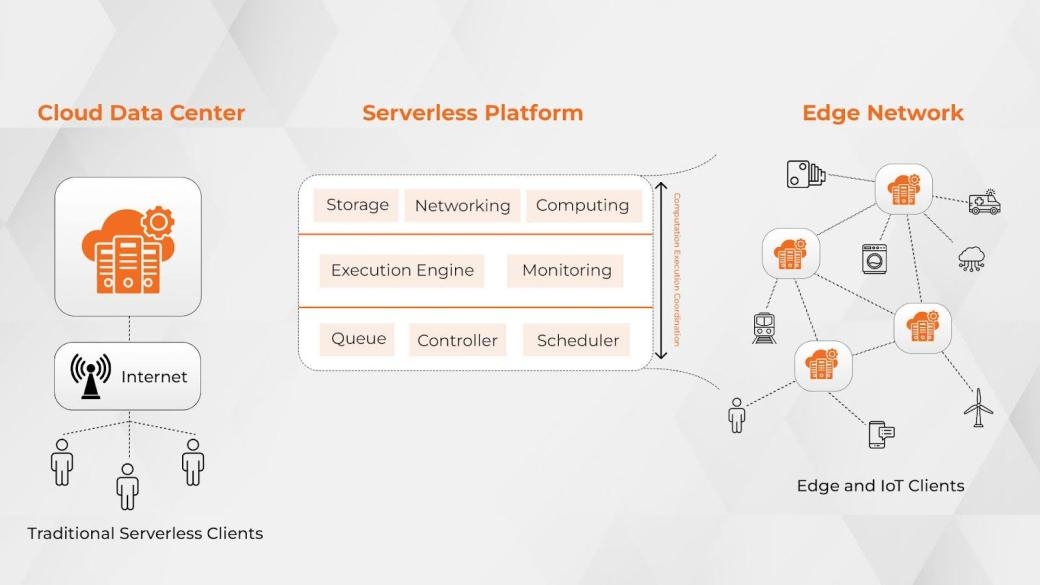
Using serverless and edge computing together isn’t just about better technology. It’s a smart choice that’s changing the way today’s businesses give people better online experiences. It helps them get the most out of these key benefits:
- Very Low Delay: When speed really matters, handling data closer to where it’s needed can make a big difference. By running your code near your users, you can make things happen much faster. Think of an online store that shows personal suggestions right away, or a game where each action feels super quick. That kind of fast response is what you get with serverless computing at the edge.
- A Better User Experience: People today want apps that are quick, smart, and always work. Using edge and serverless technology helps you show content that's just right for each person, manage sudden increases in traffic, and make loading faster. This means users are more satisfied, stay longer, and interact more with your app.
- Scalability on Demand: One of the biggest challenges for IT teams is dealing with sudden or unexpected growth. Serverless and edge systems grow automatically, both in the main data center and closer to users. Whether you're releasing a new feature or suddenly getting a lot of traffic, your system adjusts on its own to handle it. No need for late-night calls to add more servers.
- Build Faster, Worry Less: Developers can spend more time creating new features instead of dealing with setup and servers. Cloud functions and edge platforms help release updates faster, so your team can move quickly and keep up with what users need.
- Cost Efficiency: Why spend money on things you're not using? With serverless and edge computing, you only pay for what you actually use, measured by the millisecond. This lets you give users fast performance around the world without spending too much.
In short, combining serverless with edge isn’t just about technology. It is about delivering the kind of fast, scalable, and cost-effective experiences that today’s users (and businesses) demand.
Real-World Use Cases: Where Serverless + Edge Computing Deliver Value
Serverless and edge computing are not just ideas for the future. They are already changing how businesses run and how people use digital tools. Here is how companies are using them together to solve real problems and make a clear impact.
- Real-Time Content Delivery: Stores and media websites are using serverless functions at nearby servers to show content that fits each user quickly. This depends on where the person is, what they do on the site, and what device they are using. For example, an online shop can change prices, show different product suggestions, or switch the language for each visitor in just a few milliseconds. This helps people see content that matters to them right away, which keeps them interested and more likely to buy something.
- IoT and Edge Automation: Industries like logistics, manufacturing, and smart cities use devices and sensors spread out in different places. These sensors collect data from things like vehicles, machines, or buildings. Instead of sending all the data to a central system, the information is processed right where it’s collected. This is done using lightweight tools that don't need a full server. It helps make quick decisions, such as fixing equipment before it breaks or finding better travel routes. This setup keeps delays very low, often less than 10 milliseconds, which is important when fast decisions are needed.
- AI Inference at the Edge: More and more companies are using AI for things like spotting fraud, analyzing video, or powering smart assistants. Instead of sending all the data to the cloud, they run AI models close to where the data is created. This way, only key results or alerts are sent to the cloud. It helps save on internet costs, gives faster responses, and keeps user data more private.
- Global SaaS Applications: For software companies that have users all over the world, using serverless and edge computing helps keep the app running smoothly, no matter where someone is located. Things like logging in, checking access, and turning features on or off can happen near the user, which makes everything feel faster and smoother, even when lots of people are using the app at the same time. This setup also makes it easier for teams to release updates and new features without worrying, since the system is already built to handle more users and keep things quick.
In all these situations, the main idea is being able to give users quick, dependable, and smart experiences without having to deal with the usual hassle of managing complex systems. Companies using this method are clearly seeing better customer satisfaction, smoother operations, and lower costs.
Key Challenges to Address
Serverless and edge computing offer great benefits, but they also come with their own set of challenges that business and tech leaders need to know about. Knowing these challenges ahead of time can help teams plan better and avoid unexpected problems.
-
Cold Start Delays: Serverless functions can grow and shrink based on demand, which is great, but it can also cause a small delay called a "cold start." If a function hasn’t run for a while, it might take a few milliseconds or even seconds to start up.
If your app needs to be fast all the time, these delays can affect how users experience it. Picking the right service and setting things up well can help reduce these delays.
-
Debugging and Observability: When your code runs in many different places, finding and fixing problems can become more difficult. Old-fashioned debugging methods might not work well when everything is spread out.
To fix issues quickly, teams need good tools for monitoring, logging, and tracing what’s going on, especially when problems happen in more than one place.
-
Vendor Lock-In: If you depend too much on one cloud or edge provider, it can be tough to switch to another later. Each provider has its own way of doing things, which can make switching difficult.
To avoid this problem, businesses should use tools and designs that work across different platforms and don’t rely too much on one provider’s special features.
-
Security at Scale: Running code in many different places means your app is open to more possible attacks. You need to follow strong security steps like using good passwords, encrypting data, and checking for weaknesses regularly.
It’s also important to ensure that all locations follow the same security rules to keep your data safe and comply with any legal requirements.
By solving these problems early, companies can get the most out of serverless and edge computing. This helps them give users quick, scalable, and safe digital experiences no matter where they are.
Best Practices for Your Business Success
Using serverless and edge computing can help your business stand out, but the real benefit comes from how you use these tools.
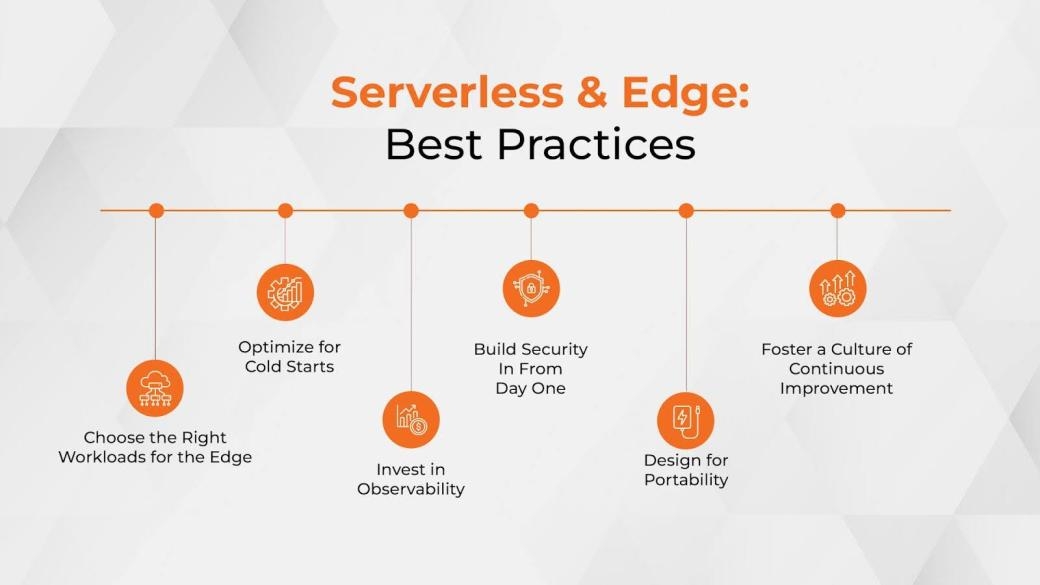
Here are some proven tips to help teams build strong, fast systems that can handle today’s needs and grow for the future:
- Choose the right workloads for the Edge: Not everything needs to run at the edge. Start by figuring out which parts of your app really need super-fast response times, like logging in users, personalizing content, or delivering media. Big tasks or ones that use a lot of data might still work better in the main cloud. When you put the right jobs in the right place, things run faster where it matters and stay efficient overall.
- Optimize for cold starts: Cold starts happen when a function takes a bit longer to start because it hasn’t been used recently. To keep things quick for users, try keeping small “warm-up” processes running, breaking big functions into smaller ones, or using services that are known for fast startups. Some platforms also offer ways to keep functions ready to go at all times.
- Invest in observability: Good monitoring is key in systems that run in many places. Use tools that let you see what’s happening in real time — like logs, metrics, and traces — across both the cloud and the edge. Tools like OpenTelemetry, Datadog, or built-in cloud features help teams find problems, understand how things are performing, and keep everything running smoothly.
- Build security in from day one: Don’t wait to think about security. Always encrypt data, control who can access what, and check these settings often. Since code runs in many places at the edge, it’s important to automate security checks and make sure rules stay the same everywhere. Regular reviews and scans help protect your system and build trust.
- Design for portability: Try not to rely too much on one cloud provider. Use open tools, containers, or platforms that let you work across different clouds. This way, you can switch or grow more easily as your needs change or new options become available.
- Foster a culture of continuous improvement: Think of your edge setup as something that’s always evolving. Get your teams to test new ideas, listen to feedback, and keep improving both the code and the system. Check things like performance, cost, and security often to make sure everything stays on track with your business goals.
By following these best practices, organizations can unlock the full potential of serverless and edge computing, delivering faster, smarter, and more secure experiences for users everywhere.
Moving Forward with Confidence in Computing
Serverless and edge computing are changing how businesses create fast, scalable, and reliable digital services. By using both, companies can improve performance and flexibility, helping them meet users' needs no matter where they are.
Of course, there are things to think about, like dealing with cold starts and making sure security and monitoring are strong. But with good planning and a solid understanding of what works best, these challenges can be handled without making things too complicated.