Stop Leaving Money on the Table: Designing App Pricing Strategy

Stop Leaving Money on the Table: Designing App Pricing Strategy
Effective application pricing is a critical, often-overlooked pillar to make your app successful. This goes beyond costs; even minor improvements can significantly boost profits. Mastering it requires understanding distinct customer segment values and strategically structuring your pricing based on those values to drive sustainable growth.
In the competitive world of application development, building a great product is only half the battle. Launching successfully also involves other critical pieces rooted in the Four Fit Model.
Too often, founders and product teams get obsessed with features and user experience, treating application pricing strategy as an afterthought. This is a big and costly mistake. The right pricing model can genuinely make or break your app's success in the market. In fact, research shows that just a 1% improvement in pricing strategy can lead to a massive 11% profit increase.
This article will walk you through some key principles and common pitfalls to keep in mind when you're designing your app's pricing strategy. We'll look at how to consider both your costs and what your different customer segments truly value.
Whether you're just launching or rethinking your current pricing model, this article aims to help you find that sweet spot that drives growth and sustainability.
Why Pricing Your Application Is Harder Than You Think
Pricing your application effectively is a deceptively complex challenge that catches many founders off guard. Many founders I’ve met instinctively pick a number based on costs and user growth projections, with the promise of A/B testing it. But when push comes to shove, they never actually implement an A/B test and continue to rely on their gut feeling. Besides, once you set a pricing, it sticks; both inside and outside your organisation.
The economics of software do not help either. Since the marginal cost of serving additional users is practically zero, founders are constantly tempted to charge too little just to gain market share. I see this behavior especially to compensate for a bad market-product fit or product-channel fit.
To complicate matters further, the feedback you receive about pricing from clients is often contradictory or misleading; your enterprise customers rarely complain that you're charging too little but instead request additional features (a subtle indicator you're underpricing), while price-sensitive users will always push for lower costs regardless of the value they receive.
The pricing psychology dimensions of pricing – from anchoring effects to perceived value – frequently overshadow straightforward economic calculations. Most start-up teams possess deep expertise in product development but comparatively little to no experience in strategic pricing. This leads to decisions based on gut feeling or cost price instead of methodical analysis.
The reality of coming up with the right pricing strategy requires more nuance. Different customer segments perceive value in wildly different ways, and a one-size-fits-all approach leaves money on the table.
The Fundamental Shift in Application Pricing Philosophy: Value-Based Pricing
The modern approach to application pricing represents a fundamental paradigm shift that savvy companies are embracing: moving away from "pricing the product" to strategically "pricing the customer". This transformation requires abandoning traditional cost-plus models (where you simply add a markup to development costs and hope for the best) in favor of value-based pricing that reflects the actual benefits users receive.
Usage-based metrics have emerged as powerful tools in this new landscape because they naturally align your revenue with the value customers extract, growing as their success with your application grows.
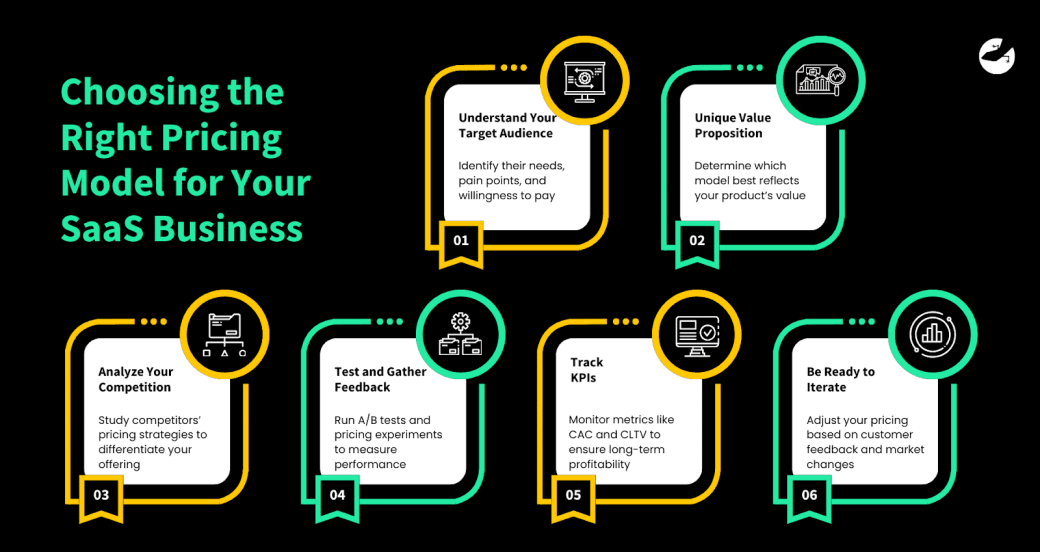
Leading SaaS companies now design their tiered pricing not around arbitrary feature sets but around carefully researched customer personas, each with distinct needs and willingness to pay. This approach highlights the critical difference between mere feature differentiation (gating access to capabilities) and true value differentiation (packaging solutions that address specific pain points for different segments).
Understanding the Rich, Poor, and Middle Customer Problem in App Pricing
The most common pricing mistake happens when companies focus exclusively on the mythical "average" customer, creating significant revenue leakage across their customer base. Every market contains what we might call "rich" enterprise customers with substantial budgets, complex needs, and a high willingness to pay alongside "poor" price-sensitive customers who need core functionality at accessible price points.
Between them sits your middle segment. Failing to recognize these distinct groups means you either leave money on the table from enterprise customers who would gladly pay more or lose price-sensitive customers who could become profitable at the right price point.
To design a successful pricing strategy, you need to identify the specific differentiating characteristics of each enterprise customer in your market. For example, their need for enhanced security features, dedicated support, or advanced workflows. These are features for which enterprise users happily pay a premium (and are often required to do so for compliance reasons).
Equal attention must be paid to understanding price-sensitive customers and their unique requirements, which often focus on core functionality without the enterprise bells and whistles.
This is not unlike airlines, where you have different price tiers and classes per user segment. A short round trip is priced very differently from a two-week stay. The first one is likely a business traveler who offsets cost vs time, the latter is probably a cost price-sensitive vacationer. Similarly, different travel classes have their own audiences willing to pay at various price points.
The true art lies in crafting app pricing strategies that effectively serve the middle segment while capturing appropriate value from the other two groups. This understanding reinforces why customer segmentation must drive pricing strategy rather than allowing pricing to dictate your segmentation approach.
The Application Economics Paradox: Low Costs but High Value
The economics of modern applications present a paradox that fundamentally shapes pricing strategy: software requires substantial upfront investment to build but costs virtually nothing to operate per additional user. This creates the zero marginal cost phenomenon unique to digital products, where serving your millionth user costs essentially the same as serving your tenth.
While this enables economics of scale, it simultaneously creates unique pricing challenges by tempting founders to charge too little simply because their incremental costs are so low. The danger lies in underpricing based on your minimal operating costs rather than the substantial value your solution delivers to customers.
Many promising startups have fallen into the seductive "we will scale first and monetize later" trap, only to discover they cannot easily raise prices once they have trained their market to expect low costs or free access. Smart pricing strategy requires calculating the true cost of customer acquisition against projected lifetime value, ensuring sustainable unit economics from the beginning.
Crafting Your Multi-Tiered Pricing Strategy
Successful multi-tiered pricing strategies begin with methodically identifying your key customer segments and researching their distinct willingness to pay. This varies dramatically across different user profiles. The art of tier design, therefore, lies in creating meaningful distinctions between pricing levels that align with genuine value differences customers can easily understand, not merely implementing arbitrary feature lockouts that feel punitive rather than value-based.
For applications offering free plans, designing effective free-to-paid conversion mechanisms becomes crucial. Conversion points are carefully placed at moments when users experience maximum value rather than arbitrary usage limits.
Smart companies implement what pricing strategists call the "removal of roofs" principle, making the limitations of lower tiers obvious enough that power users naturally seek upgrades when they encounter these boundaries during moments of high engagement.
Throughout this process, avoid the common mistake of targeting only middle customers, instead creating pathways for both price-sensitive users to enter your ecosystem and enterprise customers to access premium options that capture their higher willingness to pay. Finally, incorporate psychological pricing techniques such as anchoring, decoy pricing, and strategic bundling that subtly guide users toward your preferred tier while maintaining their sense of choice and control over the purchasing decision.
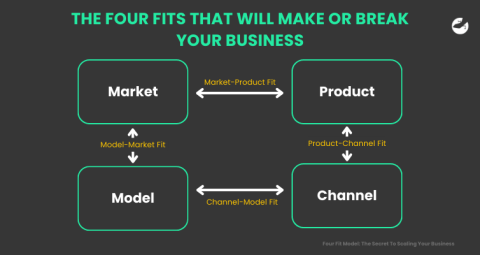
Pricing professionals often recommend setting appropriate price ratios between tiers, with many successful SaaS companies following something akin to a 1:3:9 rule where each tier represents approximately a 3x jump from the previous level, reflecting the increased value delivered. A one-size-fits-all all however, is too simple, and at Lizard Global, we recommend a more tailored pricing strategy to our clients, integrated with the insights gained from applying the Four Fit Model.
Finding Your Perfect Application Pricing Metric
Identifying the right pricing metric for your application represents one of the most strategic decisions you will make. Per-seat pricing is often defaulted to despite rarely being the optimal approach for many product categories.
The perfect pricing metric aligns with how customers perceive and receive value from your application, creating a fair exchange where revenue grows in proportion to the value delivered. Innovative companies have pioneered metrics beyond the standard per-user model, such as Twilio charging based on API calls, Snowflake on compute resources consumed, and Intercom on the number of people reached through their platform.
The most sophisticated pricing strategies often combine multiple metrics to create balanced models that capture different value dimensions, such as a base platform fee plus usage components or tiered access with add-on capabilities. Finding your ideal metric requires consistent testing and iteration, gathering data on how different approaches affect adoption, expansion, and retention over time.
Successful applications implement pricing guardrails that prevent customer bill shock by providing usage visibility, predictable caps, and smooth transitions between pricing tiers. The ultimate goal should be designing application pricing that grows naturally with customer success, ensuring that as your application delivers increasing value to customers, your revenue reflects that expanding relationship.
Companies that master this alignment create sustainable growth engines where customer success and company revenue become perfectly synchronized, creating virtuous cycles of expansion.
The Land-and-Expand Myth: When It Works and When It Fails
The land-and-expand pricing model has achieved mythical status in SaaS circles, yet the uncomfortable truth remains that despite its widespread popularity, this approach fails far more often than it succeeds.
Land-and-expand is primarily a pricing and growth model focused on individual customer accounts. You acquire a customer with a relatively small initial commitment or price (the "land") and then increase the revenue generated from that customer over time (the "expand").
For this strategy to work, specific market conditions must exist: extremely low customer acquisition costs (CAC), natural viral adoption patterns within organizations, minimal sales touch requirements, and strong network effects that increase value as usage expands.
Companies considering this approach must honestly calculate the true cost of customer acquisition in a land-and-expand model, accounting not just for marketing expenses but the carrying cost of supporting minimally paying or free users who may never convert to higher tiers.
Smart application providers implement alternative strategies that capture appropriate value upfront while offering growth paths, such as minimum commitment levels, implementation fees reflecting onboarding value, or required service components that ensure successful adoption. The fundamental challenge is to balance rapid growth against sustainable unit economics, guaranteeing each customer relationship becomes profitable within an acceptable timeframe.
The most successful modern approach creates a hybrid model that captures meaningful initial value while still enabling expansion. It provides upgrade paths that follow natural customer value inflection points rather than arbitrary limitations designed primarily to force upgrades.
Creating "First, Second, and Third-Class" Experiences with Tiered Pricing
The transportation industry offers valuable lessons for application pricing through its time-tested approach to tiered experiences, where the core service remains identical (getting from point A to B). In contrast, the experience varies dramatically by price point. Successful application companies design experience differentiators that feel natural and value-aligned rather than punitive or artificially limiting, creating genuine reasons for customers to upgrade as their needs evolve.
To create premium experiences that justify higher prices, you need to thoughtfully address the specific needs of power users and enterprise customers. This includes priority support, advanced customization, dedicated resources, and specialized capabilities that solve problems unique to larger organizations. Even free or basic tiers must remain genuinely functional for their intended use cases while incorporating clear upgrade incentives that emerge naturally as users grow.
Sophisticated applications leverage onboarding processes and user flows to subtly highlight tier differences when users would most appreciate advanced features, making upgrade decisions feel like a natural progression rather than forced upsells. The most common pricing mistakes I see involve creating tiers where everything is essentially identical except for some arbitrary limits. Customers immediately recognize this as artificial barriers rather than value-based distinctions, lowering the perceived value of your product.
Structuring for Success in Application Pricing
Developing a winning pricing strategy for your application isn't about finding some magical price point. It's about creating a structure that captures value appropriately across different customer segments. The most successful applications don't just solve problems; they package and price those solutions to reflect the diverse value they deliver to various users.
As you implement the strategies outlined in this guide, remember that application pricing is not a one-time decision but an ongoing process of refinement and optimization, best guided by data. By shifting your thinking from "what should we charge?" to "how should we structure our pricing based on value?", you'll create a foundation for sustainable growth that rewards both your customers and your business.

Jeremy Raes
Lizard Global
He is the co-founder and CEO of Lizard Global, a software development company that helps businesses build digital products with real traction and sustainable growth. With over a decade of experience working with scale-ups and corporates in more than 20 countries, and more than 60 five-star reviews on Clutch, he’s seen what works, what fails, and why.